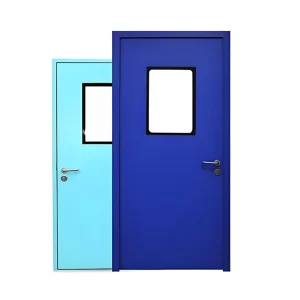
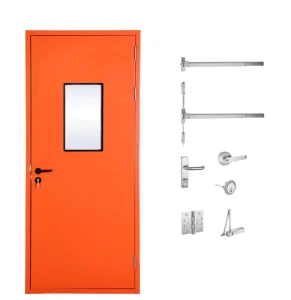
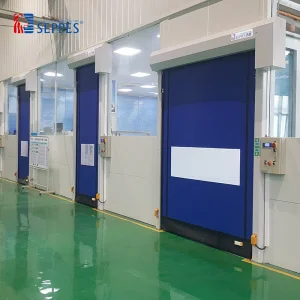
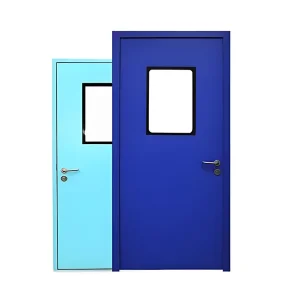
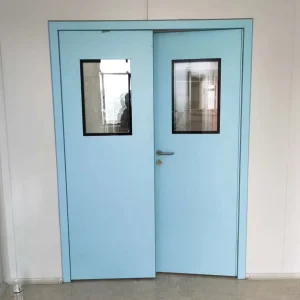
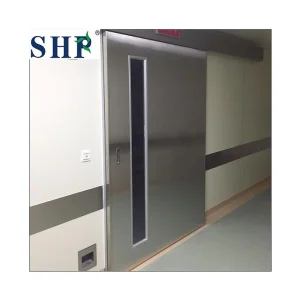
Engineered specifically to meet cleanroom criteria for Nepal's harsh climatic zones, high humidity, and seismic variations.
The industrial landscape in Nepal is witnessing rapid modernization, particularly within the pharmaceutical, biotech, and healthcare sectors. Industry clusters across cities like Kathmandu, Birgunj, Lalitpur, and Pokhara are experiencing a strategic shift towards stringent international compliance framework models. Adherence to World Health Organization Good Manufacturing Practices (WHO-GMP) and ISO 14644 cleanroom standards has transitioned from being a voluntary advantage to a legal regulatory requirement enforced by the Department of Drug Administration (DDA) of Nepal.
However, engineering cleanroom barriers in Nepal presents distinct microclimatic challenges. The extreme humidity variances between the monsoon season and the dry season, combined with high particulate matter (PM2.5/PM10) concentrations in urban and valley terrains, require advanced airtight seal technologies. Standard commercial entryways fail under continuous positive pressure environments, resulting in pressure leaks, contamination ingress, and expensive HVAC system strains. Our cleanroom doors utilize double-silicone airtight gaskets, flush frames, and antimicrobial skins designed to counter these local challenges.
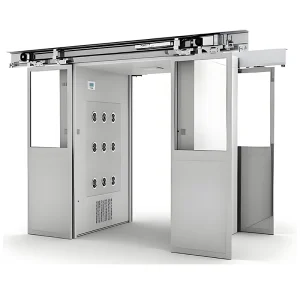
“For Nepal's developing domestic pharmaceutical sector, cleanroom integrity starts at the threshold. Air lock systems are critical to maintain negative/positive pressure cascades, safeguarding high-potency formulations from external contamination.”
The global market demands absolute mechanical reliability and digital trace integration for access control systems. Here is our technological blueprint for high-performance installations.
Next-generation facilities rely on microprocessor-controlled interlocking logic. Our doors integrate seamlessly with Building Management Systems (BMS), ensuring that airlock cycles remain intact. Electronic control boards prevent dual door openings, protecting clean zones during raw material transfer or operator shifts.
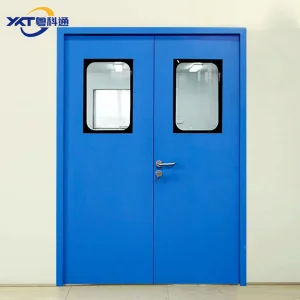
To eliminate particle accumulation zones, our cleanroom doors feature completely flush windows with double-pane safety glass. Integrated silica gel desiccant packs prevent condensation or fogging from internal and external temperature gradients, vital for operations in high humidity valleys like Kathmandu.
Constructed using High-Pressure Laminates (HPL) or specialized powder-coated galvanized steel, our door surfaces offer high resistance against corrosive agents. The materials withstand cleaning protocols involving Vaporized Hydrogen Peroxide (VHP) and aggressive alcohol sanitizers.
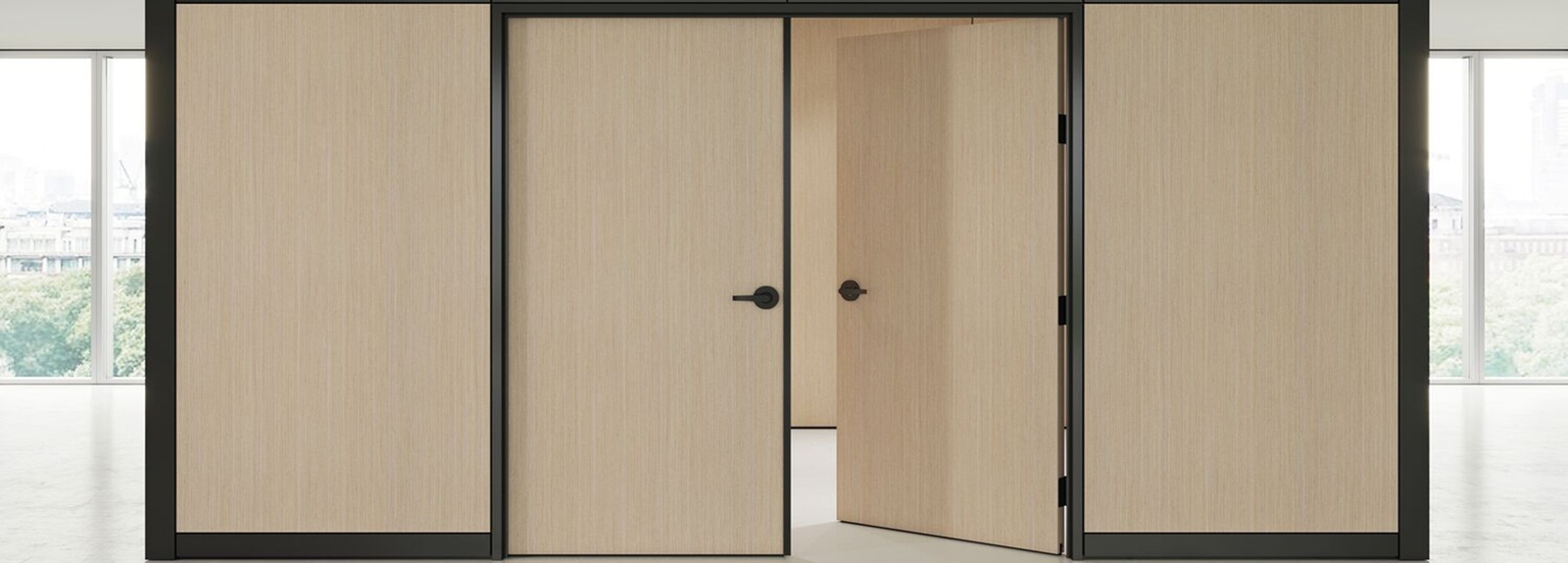
As a leading brand under Changzhou CR Doors Co., Ltd., we maintain a production area of over 20,000 square meters, utilizing high-precision CNC punching, laser cutting, and automated bending production lines. Our specialization ranges from specialized fire doors, fire-resistant windows, to high-performance cleanroom swing and sliding doors.
We are fully certified in internationally recognized management standards, including ISO9001 (Quality Management Systems), ISO14001 (Environmental Management), and GB/T28001 (Occupational Health and Safety). For cleanroom operators in Nepal, this represents a consistent supply chain capable of delivering highly customized specifications directly to job sites, complete with logistics coordination via border crossings like the Rasuwagadhi-Keyrung border or sea routes through Kolkata Port.
Our R&D efforts are focused on integrating intelligence, cleanroom structural longevity, and energy efficiency. Below is our engineering roadmap for next-generation facilities in developing regions.
A complete suite of entryways for material transfers, clean storage corridors, and biosafety labs.
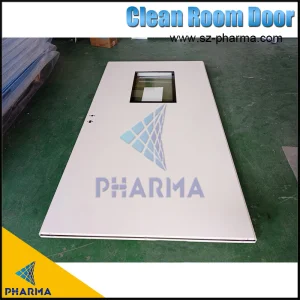
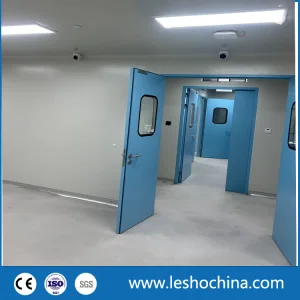

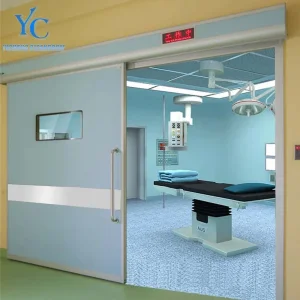
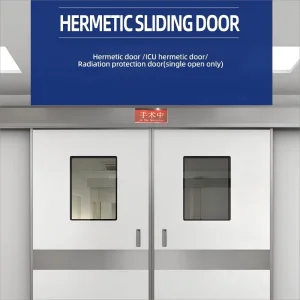
Engineered with specialized seal mechanisms and materials like HPL, glass, and reinforced steel for medical wards, diagnostics, and sterile processing areas.
Answering the most critical engineering, compliance, and logistical questions regarding cleanroom barrier projects in Nepal.
Get a customized quotation, complete drawing sets, and validation documentation tailored to your facility parameters in Nepal.
 CR Doors